

I grew up eating curry—but not this kind of curry.
Thai food came into my life much later, and once it did, there was no going back.
There’s something about the combination of creamy coconut milk, aromatic curry paste, a little sweetness, fresh lime, and that rich peanut flavor that just works. And this Vegan Panang Curry has become one of those meals I look forward to making again and again.
It’s cozy enough to feel like comfort food, but it’s also loaded with colorful plant foods.
My favorite way to serve it is over brown jasmine rice with a green vegetable on the side—usually string beans—and a simple salad. And on days when I’m feeling a little extra, there may or may not be a veggie spring roll involved.
No judgment. 😋
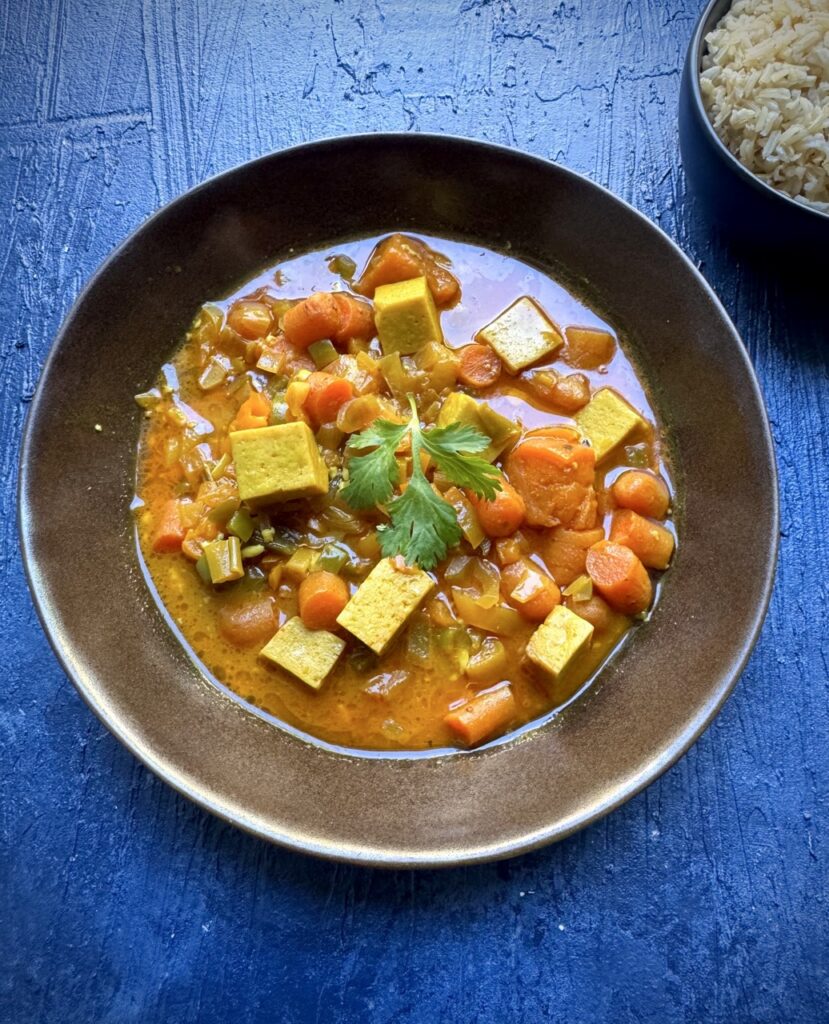
Tofu: Plant-Based Protein With Staying Power
Tofu gives this curry its primary protein boost. Soy foods such as tofu provide high-quality plant protein, and research suggests that incorporating soy foods into an overall healthy dietary pattern may have favorable effects on cardiovascular health. Reviews of the human evidence generally find soy foods to be more beneficial than harmful when eaten as part of a balanced diet.
And if soy isn’t your thing, you’re not left out. There are now soy-free tofus made from ingredients such as fava beans, chickpeas, and pumpkin seeds that work beautifully here.
Sweet Potatoes + Carrots: Bring on the Orange
Any time you see deep orange vegetables on my plate, you can probably guess what I’m thinking:
Beta-carotene.
Both carrots and orange-fleshed sweet potatoes are rich in carotenoids, including beta-carotene, which the body can convert to vitamin A. Vitamin A supports normal immune function, vision, and skin health. Sweet potatoes also contribute fiber and other plant compounds. (PubMed)
Plus, their natural sweetness works perfectly with the spicy-savory curry sauce.
Turmeric: More Than Pretty Color
Turmeric gives this curry its beautiful golden warmth, but it also contains curcumin, a plant compound that has received considerable attention for its potential effects on inflammatory and oxidative-stress pathways.
Meta-analyses of randomized trials have found reductions in some inflammatory biomarkers with curcumin or turmeric supplementation, although results vary according to dose and formulation. That doesn’t mean the teaspoon of turmeric in dinner is medicine—but it does make turmeric a flavorful addition to an overall plant-rich eating pattern.
That distinction matters. We don’t have to turn every spice into a supplement to appreciate what it contributes to our meals.
Garlic, Onions, Cilantro + Spring Onions: Don’t Forget the Flavor Builders
These ingredients may look like supporting actors, but they’re doing a lot of heavy lifting.
Garlic, onions, spring onions, and cilantro add layers of flavor that allow a plant-based meal to feel rich and satisfying without relying exclusively on salt or added fat.
They also help us increase the variety of plant foods we eat—and variety is one of my favorite strategies for building a more nutrient-dense diet.
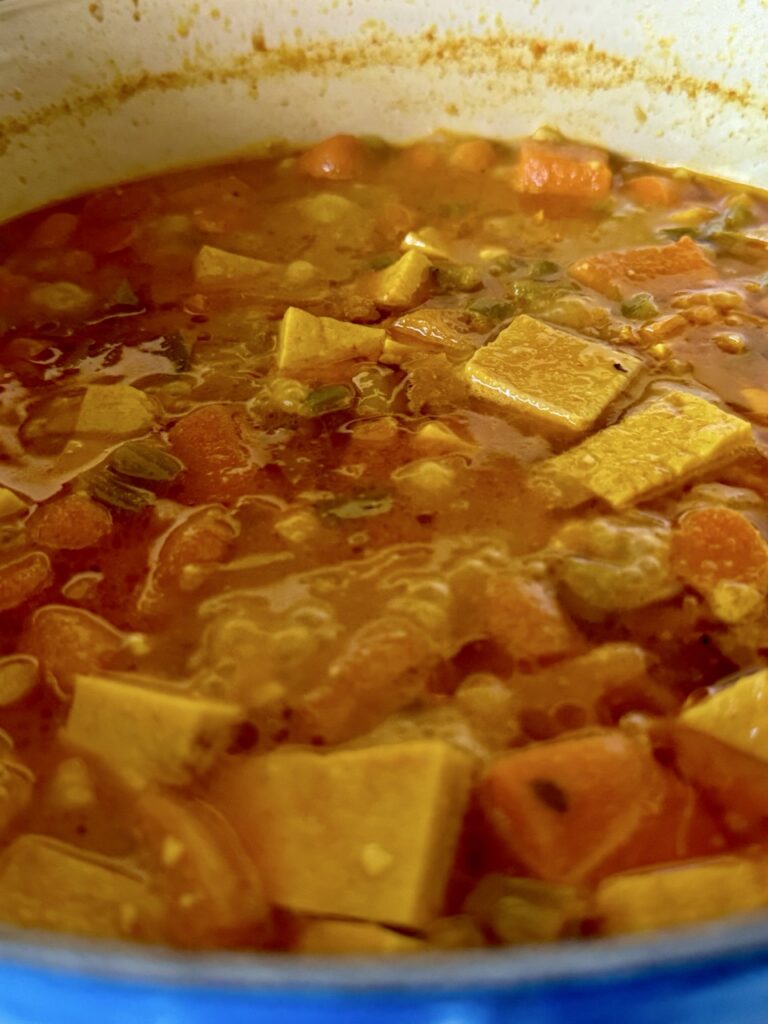
Peanut Butter: Creaminess With Benefits
Peanut butter is my not-so-secret ingredient here.
It makes the sauce creamy, rounds out the curry paste, and adds protein and predominantly unsaturated fats. The chopped peanuts on top also bring a little crunch, because texture matters.
If you’ve ever wondered why restaurant curry tastes so luxurious, the combination of coconut milk and peanut butter is part of the magic.
Want More Protein? Add Chickpeas
I sometimes add a drained can of chickpeas.
Is it traditional Panang curry?
Nope.
Do I care?
Also nope. 😂
Chickpeas add another layer of plant protein and fiber, making this an especially satisfying meal. They’re an easy addition if you’re trying to make a bowl more substantial without doing much extra work.
A Word About Coconut Milk
Coconut milk is what gives this curry its signature richness. It also contains a substantial amount of saturated fat, so I tend to think about it in the context of my overall eating pattern rather than labeling it either “good” or “bad.”
If you’d like a lighter curry, you can use light coconut milk or replace part of the coconut milk with vegetable broth. The sauce won’t be quite as luxurious, but it will still be delicious.
The Beauty of Building a Balanced Bowl
Serve this curry with brown jasmine rice and you have carbohydrates for energy, tofu or chickpeas for protein, fats from peanut butter and coconut milk, and plenty of colorful vegetables.
Add a cooked green vegetable and a side salad, and now we’re talking.
That’s how I like to think about plant-powered nutrition: not obsessing over one “superfood,” but building meals from a variety of foods that work together.
Because eating well shouldn’t feel like punishment.
It should taste good enough that you actually want to do it again tomorrow.
And this curry definitely passes that test.
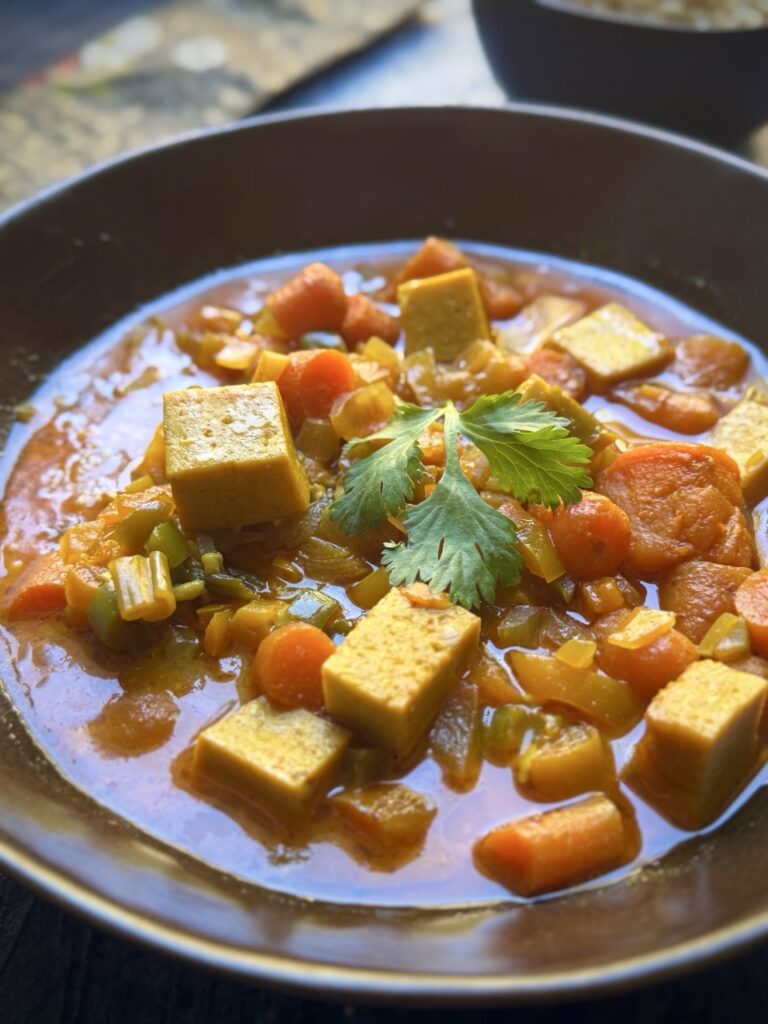
Make It Your Own
This is the kind of recipe that welcomes substitutions.
Add broccoli, green beans, spinach, bell peppers, zucchini, or whatever vegetables are hanging out in your refrigerator.
Want more protein? Add chickpeas.
Avoiding soy? Use soy-free tofu and coconut aminos.
Want it hotter? Add more curry paste.
Prefer a thinner curry? Add vegetable broth.
And if you make a double batch, do yourself a favor and freeze a few portions.
There will come a day when you open the freezer after a long day and discover homemade Panang curry waiting for you.
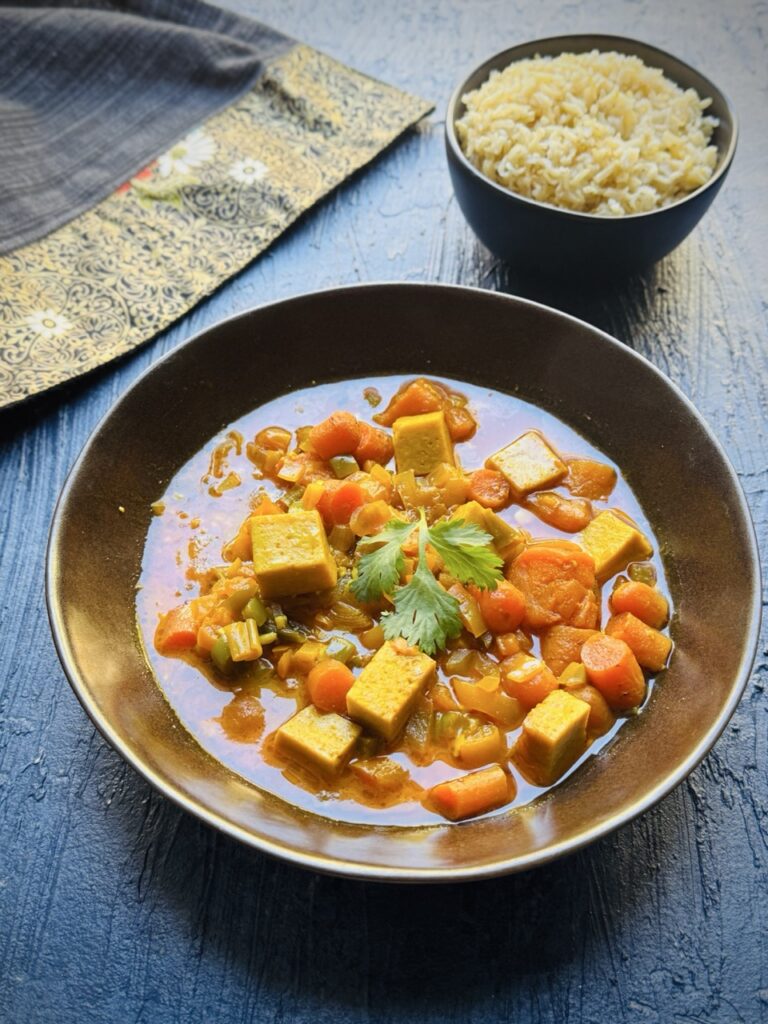
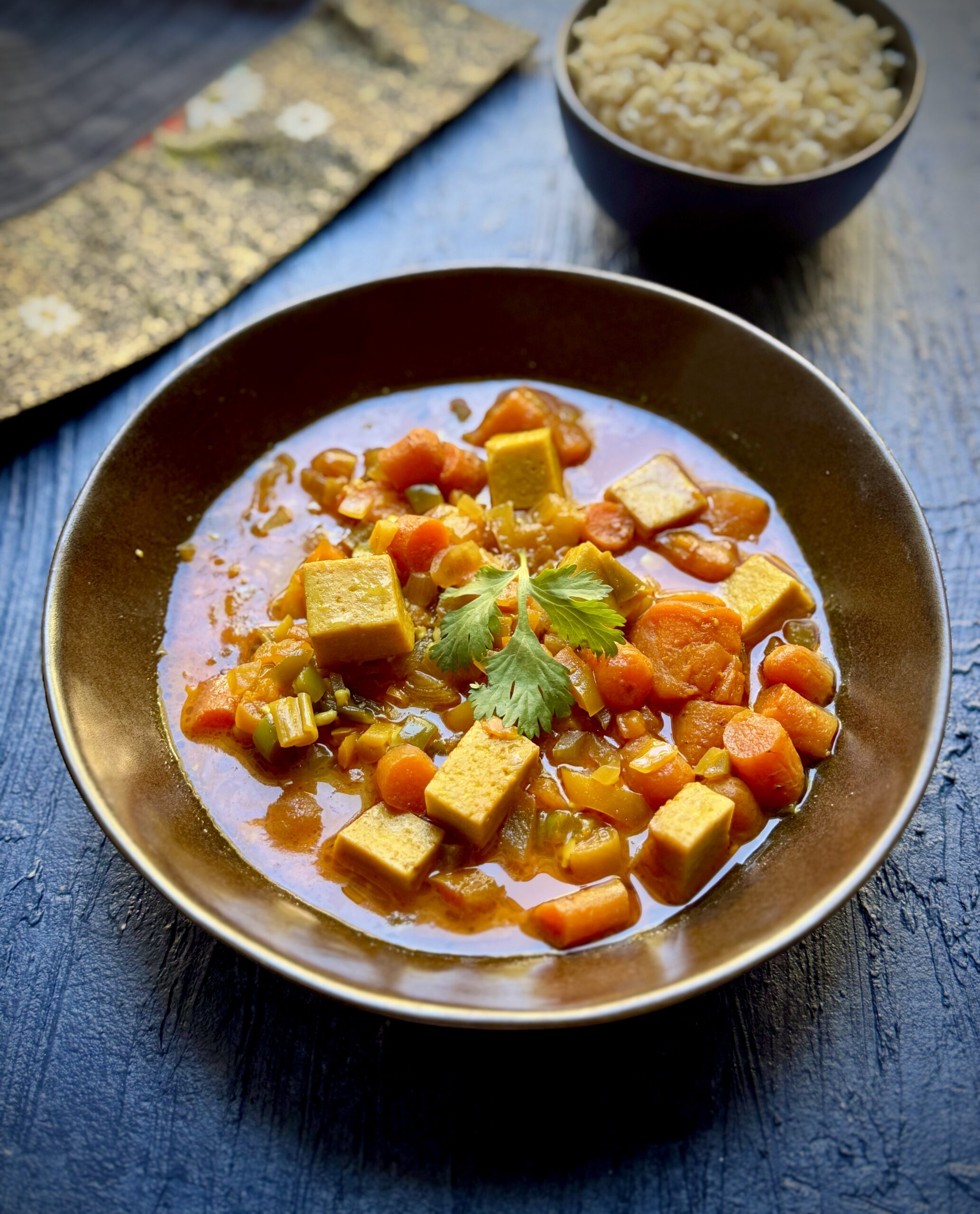
Creamy Vegan Panang Curry with Tofu
A rich and creamy Thai-inspired vegan Panang curry made with tofu, colorful vegetables, coconut milk, peanut butter, turmeric, and fresh lime. Add chickpeas for an extra protein boost or use soy-free tofu for an easy soy-free variation.
- Prep Time: 15 minutes
- Cook Time: 25 minutes
- Total Time: 40 minutes
- Yield: 4-6 1x
- Category: Dinner, Lunch, Main
- Method: Boiling
- Cuisine: Thai
- Diet: Dairy-Free, Gluten-Free
Ingredients
- 16 ounces extra-firm tofu, pressed and cubed
- 1 cup sliced carrots
- ½ cup chopped onion
- ½ cup sliced spring onions, divided
- ½ cup cubed sweet potato
- 4 garlic cloves, minced
- 1 teaspoon vegan chicken-style bouillon
- 1 (13–14-ounce) can coconut milk
- 1½ teaspoons Thai red curry paste
- ¼ cup natural peanut butter
- ¼ cup chopped fresh cilantro
- 1 teaspoon turmeric
- ½ teaspoon cumin
- 1 tablespoon ketchup
- 2 tablespoons coconut sugar
- 2 tablespoons Bragg Liquid Aminos
- 1–2 tablespoons fresh lime juice
- Salt, to taste
- Chopped peanuts, for garnish
- ½–1 cup water or vegetable broth, if needed
- Optional: 1 (15-ounce) can chickpeas, drained and rinsed
Instructions
- Press and cube tofu. Brown lightly in a skillet, if desired, and set aside.
- Sauté onion and half the spring onions for 3–4 minutes. Add garlic and cook for 30 seconds.
- Add curry paste, turmeric, and cumin and cook for 1 minute.
- Whisk in coconut milk, bouillon, peanut butter, ketchup, coconut sugar, and Liquid Aminos.
- Add carrots and sweet potatoes. Cover and simmer 10–12 minutes.
- Add tofu and optional chickpeas. Simmer uncovered for 5 minutes.
- Stir in cilantro, remaining spring onions, and lime juice.
- Adjust seasoning and consistency to taste.
- Serve over rice and garnish with chopped peanuts and fresh herbs.
Notes
Soy-free: Use fava bean, chickpea, pumpkin seed, or another soy-free tofu and replace Liquid Aminos with coconut aminos.
Extra protein: Add one 15-ounce can of drained and rinsed chickpeas.
Meal prep: The curry freezes well. Cool completely before portioning into freezer-safe containers.
Serving suggestion: Serve with brown jasmine rice, green beans, and a fresh side salad.







+ show Comments
- Hide Comments
add a comment